Printed as they drew it
Photograph a drawing from the fridge door. Your phone lifts the paper away, finds each colour on the page and traces every line, then sets the drawing on a wide white sheet with their name beneath. The wobble stays. The sun keeps all nine rays.
The photograph stays on this device; only the lines leave.
The photograph
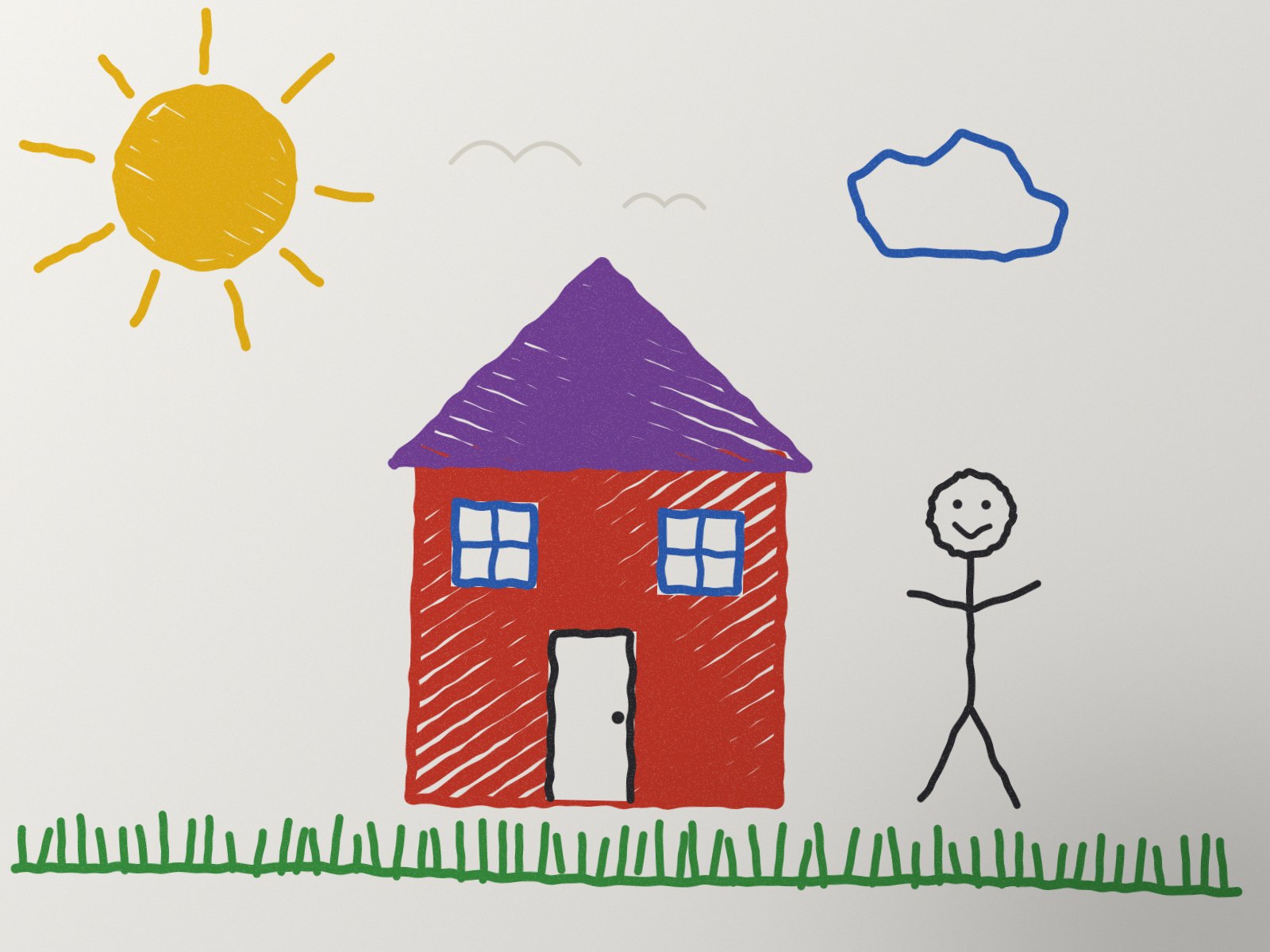
The plate, as it prints
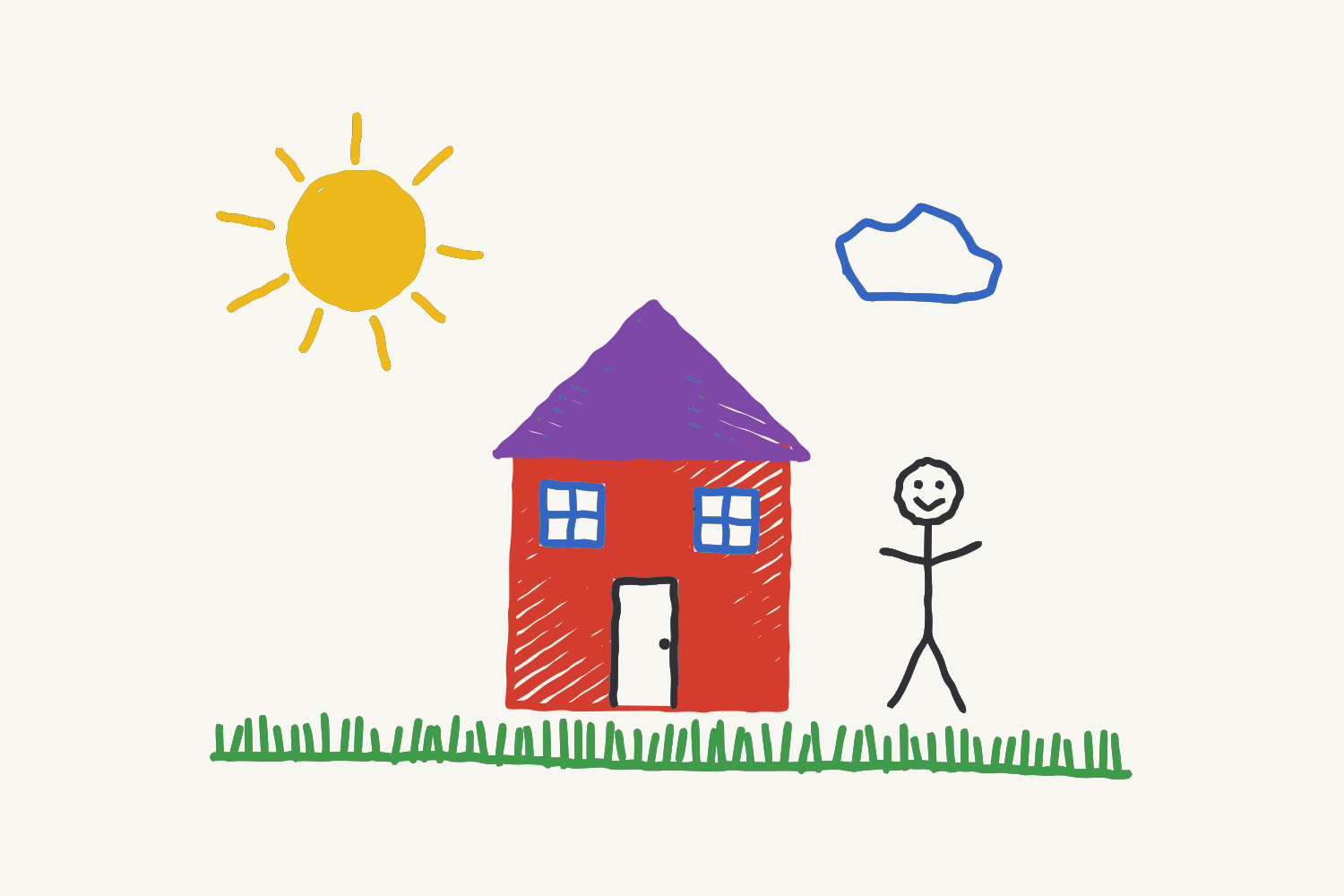
The sample: 1,582 × 1,148 px, 6 colours, traced.
The sample is ready to lift.
The Print
$65plus postage at the lab's own price
A person here looks at every print before it goes to the printer.
The Lift
-
Lifting the paper
The photograph is read for its paper colour, block by block, and the paper is divided out, so cream paper and the shadow of your phone both print as the sheet's own white. Painted Letters' Sauvola lift decides, pixel by pixel, what is a mark and what is paper.
-
Finding the colours
Every marked pixel is measured in CIELAB and grouped into at most the number of colours you set, from 2 to 12. Each colour that prints is the average of the pixels it stands for. None comes from a crayon box or a palette of ours.
-
Tracing the lines
Each colour's outline is followed around the pixel grid and straightened only where the photograph's staircase is under 1.5 px, then drawn as curves, so its edges are made at the print's own resolution. Tested on drawings with known answers: a circle, a square and a star each trace within 2% of their true area, and the worst came in at 0.3%.
-
What it won't do
No model of any kind touches the drawing. Nothing is redrawn, filled in or made larger than the photograph holds. A soft drawing, watercolour or light pencil, traces poorly, so when the traced area and the lifted area differ by more than 4% the studio prints the lifted pixels instead and tells you the largest size they hold at 150 dpi.